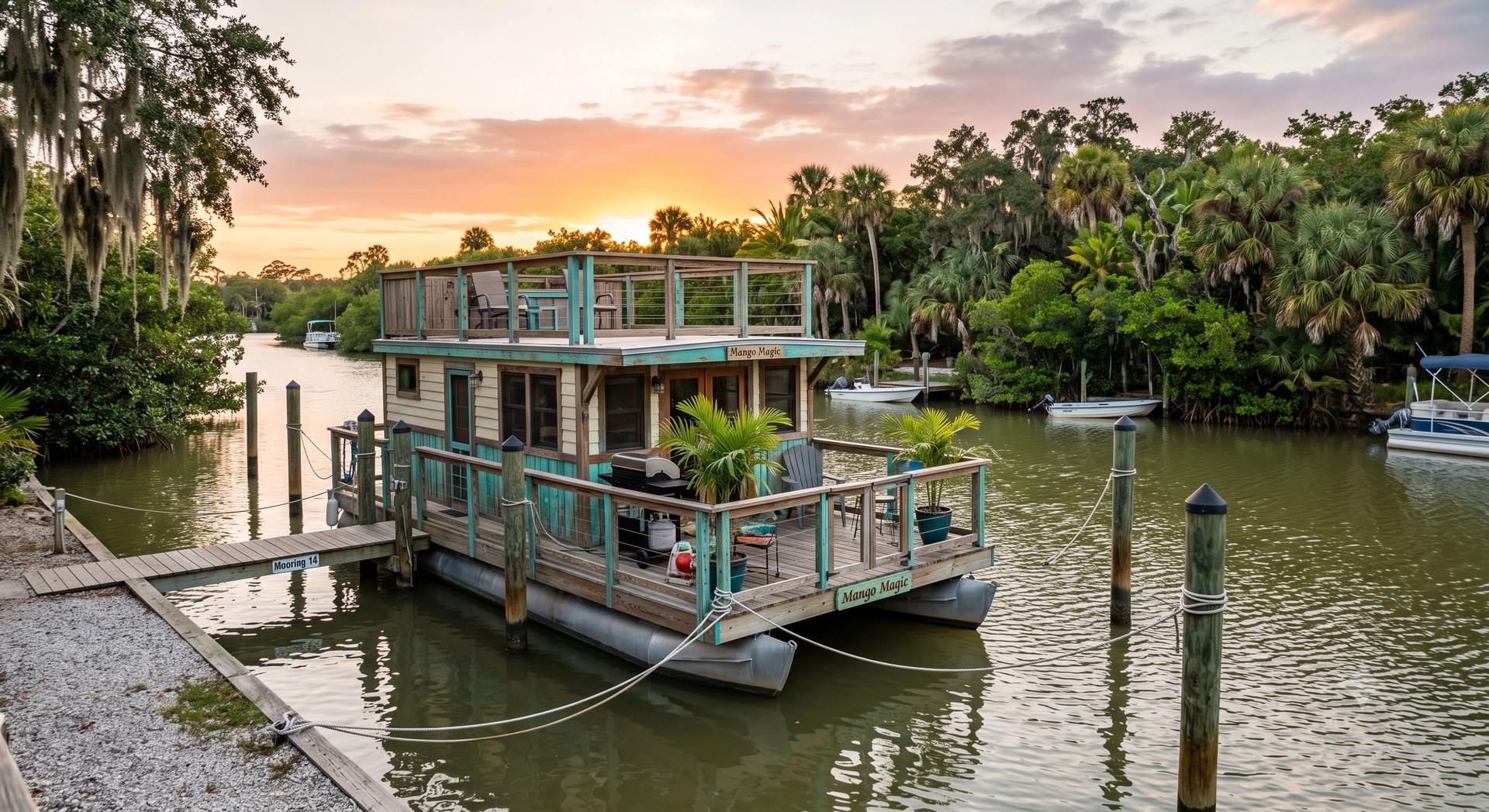
Houseboats fall between home insurance and boat insurance — and most standard policies do not cover them correctly. Here is what Florida houseboat owners must know.
The Coverage Gap That Catches Florida Houseboat Owners Off Guard
Houseboats occupy an unusual position in the insurance world — they are simultaneously a vessel and a home, and neither standard home insurance nor standard boat insurance is designed to cover them properly. Homeowner policies exclude vessels from their definitions of dwelling structures. Standard boat policies are written for vessels that move under their own power and do not address the needs of a primary residence. Florida houseboat owners who rely on either type of policy without specialist marine coverage are exposed to significant gaps that they typically do not discover until after a claim is denied or drastically underpaid.
What Florida Houseboat Insurance Must Cover
A proper houseboat insurance policy needs to address both dimensions of the risk — the vessel and the dwelling:
- Hull coverage: Physical damage to the floating structure, including the pontoon or barge hull, the superstructure (living quarters), mechanical systems, and permanently installed equipment. This covers fire, flooding, sinking, storm damage, collision, and vandalism.
- Contents coverage: For liveaboard houseboats, furnishings, appliances, electronics, clothing, and personal property represent significant values that require contents coverage at replacement cost — similar to a homeowner contents policy.
- Liability coverage: Both on-water liability (for navigating the houseboat, if it moves) and dockside premises liability (for injuries occurring on or near the vessel at its berth). A houseboat that stays permanently moored needs premises liability similar to homeowner liability.
- Fire and water damage: As a primary residence, fire or water damage to a houseboat creates the same catastrophic displacement scenario as a house fire. Coverage should reflect the full cost of repairing or replacing the dwelling and its contents.
- Medical payments: Pays for medical expenses of guests who are injured visiting the houseboat at its moorage.
Liveaboard vs Seasonal Use
Whether your houseboat is your primary permanent residence or a seasonal getaway affects coverage requirements and premiums significantly:
- Permanent liveaboard: Full dwelling replacement coverage for the houseboat structure, contents at replacement cost comparable to home contents insurance, homeowner-equivalent liability limits ($300,000 minimum), and fire/flood damage as a primary dwelling loss scenario. Premiums typically run $2,000 to $4,000 per year for a well-maintained houseboat used as a primary residence.
- Seasonal or vacation use: Lower contents values (no full household contents aboard), lower liability exposure (fewer hours occupied), potentially lower fire risk if the vessel is properly winterized when not in use. Seasonal premiums may be 30 to 50 percent lower than full-time liveaboard rates.
Florida Houseboat Locations and Their Insurance Implications
Florida has numerous established houseboat communities and popular moorage locations, each with distinct insurance characteristics:
- Fort Lauderdale New River: The New River downtown has established liveaboard houseboat communities. Urban location with good security, high marina quality.
- Florida Keys: Houseboats in the Keys face significant hurricane exposure. Named storm deductibles and haul-out considerations are particularly important for Keys-based houseboats that cannot easily be moved.
- Marathon and Key West: The Keys' liveaboard culture is strong, but hurricane risk is acute. Comprehensive coverage with adequate named storm deductibles is non-negotiable.
- Miami and Biscayne Bay: Active houseboat communities with higher-than-average theft risk combined with hurricane exposure.
Hurricane Risk for Houseboats
Houseboats present a particular challenge during hurricane events. Unlike conventional boats that can be hauled out of the water on a trailer or travel lift, large houseboats may be impossible to remove from the water before a storm. Proper hurricane mooring preparation is critical — and your insurer's storm preparation requirements must be carefully followed. Failure to adequately secure a houseboat during a named storm can result in a denied claim, leaving you without coverage for a potentially catastrophic loss.
Ready to find your best-fit insurer? Get a Quote from FloridaCover — we match every Florida boater to the right carrier for their vessel and use.
The FloridaCover editorial team has over 15 years of combined experience covering US marine insurance, Florida boating, and maritime industry research.