Pontoon boats are Florida's most popular family watercraft — and proper insurance is essential whether you are on Lake Okeechobee or Tampa Bay.
Pontoon Boats in Florida: The Ultimate Family Vessel
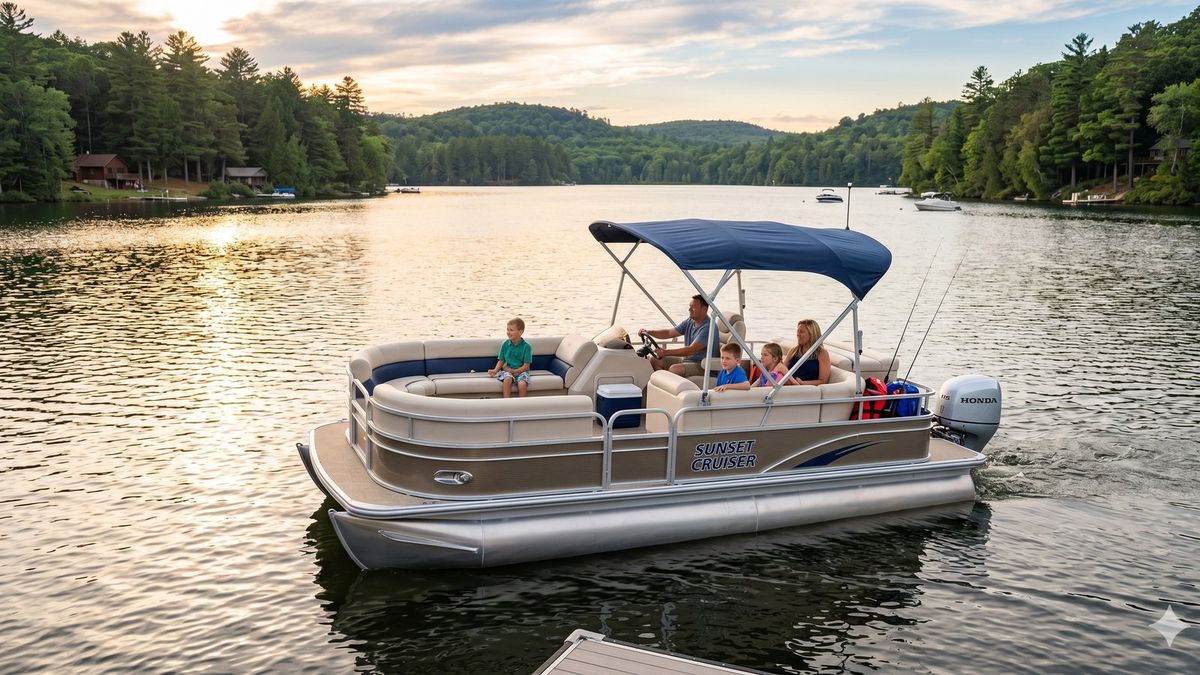
Pontoon boats have become the single most popular family watercraft in Florida, and for good reason. Their stability, spaciousness, and ease of operation make them ideal for Florida's diverse water environments — from the vast freshwater expanse of Lake Okeechobee to the sheltered bays and estuaries of Tampa Bay, Charlotte Harbor, and the Indian River Lagoon. Whether you are hosting a family day on the water, fishing in calm conditions, or taking a sunset cruise along the Intracoastal Waterway, a pontoon delivers comfort and accessibility that conventional V-hull boats cannot match.
Modern pontoons have evolved dramatically. High-performance tri-toon models — built on three aluminum tubes rather than two — can reach speeds of 45 to 55mph with twin large-horsepower outboards, carry elaborate entertainment systems, and carry values of $80,000 to $150,000 or more for premium models from Bennington, Harris, and Manitou. These are not the slow, simple pontoons of the past — they are sophisticated vessels that deserve sophisticated insurance.
What Pontoon Insurance Should Cover
A comprehensive Florida pontoon boat policy should include:
- Hull coverage: Physical damage to the pontoon tubes, deck, motor, and installed equipment. Agreed value is preferable for newer models; ACV is acceptable for older lower-value pontoons.
- Bodily injury liability: Pontoons regularly carry 8 to 14 passengers — the highest passenger loads of any recreational vessel type. This increases both the frequency and potential severity of injury claims.
- Property damage liability: Coverage for damage to docks, other boats, and structures you contact while maneuvering the pontoon.
- Medical payments: Particularly valuable given high passenger counts — pays for any passenger's medical expenses regardless of fault.
- Uninsured boater: Essential on busy waterways where many surrounding vessels carry no insurance.
- Towing coverage: Pontoons break down at sea like any other boat — towing coverage gets you back to the dock without a surprise $500 bill.
Tri-Toon vs Standard Pontoon: Coverage Differences
Insurance for a standard two-tube pontoon and a high-performance tri-toon differs in several meaningful ways. A tri-toon capable of 50mph creates much higher liability exposure than a standard pontoon that tops out at 25mph — speed increases both accident probability and injury severity in the event of a collision. If your tri-toon has twin 150hp or larger outboard motors, confirm your policy does not have a maximum horsepower restriction that would create a coverage gap.
Common Florida Pontoon Claims
Understanding the most common Florida pontoon insurance claims helps you ensure your coverage addresses the real risks:
- Outboard motor theft: Outboard motors are the most frequently stolen boat component in Florida. A 150hp Yamaha or Mercury represents a $10,000 to $15,000 target. Theft coverage on the motor is essential.
- Dock damage: Pontoons are less maneuverable than V-hull boats in tight marina situations, and docking damage is common. Property damage liability covers damage you cause to the dock; hull coverage handles damage to your own pontoon.
- Manatee zone violations: Manatee protection zones exist throughout Florida's most popular pontoon waterways. Violations in manatee zones can generate civil penalties that your marine insurance generally does not cover — a powerful incentive to obey speed limits.
Popular Florida Pontoon Destinations
Florida offers exceptional pontoon boating across many environments, each with its own risk profile that your policy should address:
- Lake Okeechobee: Large open water with afternoon chop that can develop rapidly — stay weather-aware.
- Tampa Bay: Protected inshore bay with heavy boat traffic on weekends, particularly around the Courtney Campbell Causeway area.
- Indian River Lagoon: Manatee habitat throughout — slow speed zones extensive.
- St. Johns River: Florida's largest river, popular for family cruising and fishing from pontoons.
- Crystal River: Famous for swimming with manatees — slow-speed zones everywhere, strong conservation law enforcement.
Ready to find your best-fit insurer? Get a Quote from FloridaCover — we match every Florida boater to the right carrier for their vessel and use.
The FloridaCover editorial team has over 15 years of combined experience covering US marine insurance, Florida boating, and maritime industry research.