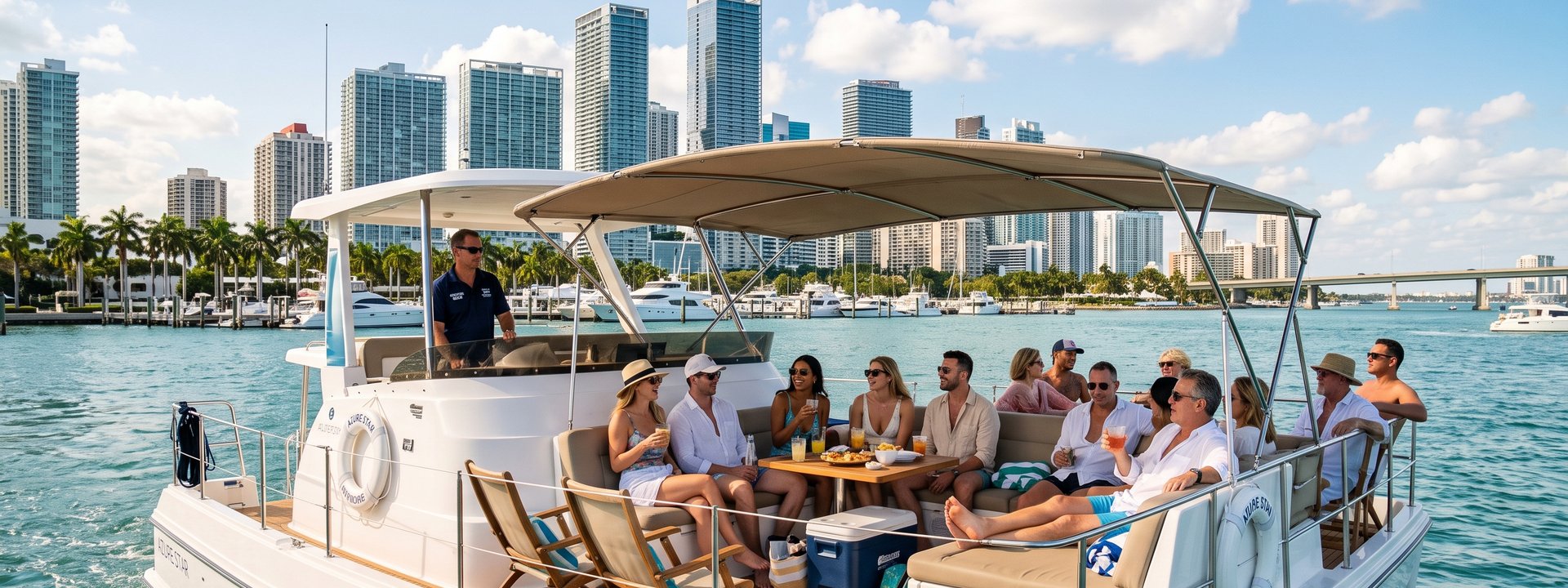
Florida marine insurance covers far more than just hull damage. This guide breaks down every coverage type in a standard Florida boat policy — and what is typically excluded.
Florida Boat Insurance: More Than You Might Think
Many Florida boat owners think of their marine insurance primarily as hull coverage — protection for physical damage to their boat. In reality, a comprehensive Florida marine policy bundles multiple distinct coverages that protect you from very different financial risks. Understanding each coverage type helps you know exactly what protection you have, identify any gaps, and make informed decisions when choosing coverage limits.
Physical Damage Coverage (Hull Insurance)
Physical damage coverage — often called hull insurance — protects your vessel against direct physical loss or damage. A comprehensive or all-risk hull policy covers damage from collision with another vessel or object, running aground, fire, sinking, capsizing, storm damage (including hurricanes), theft, and vandalism. Hull coverage is typically written on either an agreed value basis (pays the full insured amount with no depreciation if the vessel is a total loss) or actual cash value basis (pays the depreciated market value at the time of loss). For any boat of significant value, agreed value coverage is strongly recommended because it eliminates depreciation uncertainty at claim time.
Bodily Injury Liability
Bodily injury liability coverage pays for injuries you cause to other people while operating your boat. If you collide with another vessel and injure its occupants, or if a swimmer is struck by your boat, your bodily injury liability coverage pays their medical expenses, lost wages, pain and suffering, and other damages up to your policy limit. Recommended minimum limits for Florida boating are $100,000 per person/$300,000 per occurrence — though given Florida's active litigation environment, many experienced boaters carry $500,000 or more, or pair their marine policy with a personal umbrella for additional coverage.
Property Damage Liability
Property damage liability covers damage you cause to other people's property — another vessel, a dock, a marina structure, a bridge fender, or any other property you damage while operating your boat. This coverage works alongside bodily injury liability and is typically written as a combined single limit. If you back into a million-dollar sportfisher at the fuel dock, your property damage liability coverage responds. Recommended minimum: $100,000, though higher limits are advisable for boaters who regularly navigate crowded marinas and anchorages.
Uninsured/Underinsured Boater Coverage
Florida does not require boat owners to carry liability insurance, meaning a significant percentage of vessels on Florida waters are completely uninsured. Uninsured boater coverage protects you when an uninsured — or inadequately insured — boat operator injures you or your passengers. Without this coverage, your only recourse against an uninsured at-fault operator is a personal lawsuit against someone who may have no assets to collect. Adding uninsured boater coverage typically costs $50 to $150 per year and provides crucial protection in the most frustrating scenario a boater can face.
Medical Payments Coverage
Medical payments (MedPay) coverage pays for medical expenses for you and your passengers after an on-water accident, regardless of who was at fault. Typical limits range from $1,000 to $10,000 per person. MedPay pays first — before health insurance and before liability investigations are complete — providing immediate financial support for medical care after an accident. For vessels that regularly carry passengers, MedPay is an important and affordable addition to your policy.
Fuel Spill Liability Coverage
A fuel spill from your vessel can trigger federal and state environmental liability under the Oil Pollution Act and Clean Water Act. Fuel spill liability coverage pays for cleanup costs and associated environmental damages. Most comprehensive marine policies include a standard fuel spill liability limit (commonly $500,000 or more), but boat owners should confirm this coverage is present and understand the limits. Cleanup costs for even a small spill near a sensitive ecosystem can reach $20,000 to $50,000.
Personal Effects Coverage
Personal effects coverage pays for loss of personal items aboard your vessel — clothing, cameras, fishing gear, sunglasses, phones, and similar items. Coverage limits are typically modest ($1,000 to $3,000), and some items like electronics may be specifically excluded or sub-limited. High-value items like cameras, binoculars, or dive equipment should be separately scheduled if their total value exceeds the standard personal effects limit.
On-Water Towing Coverage
Towing coverage pays for emergency towing when your vessel breaks down on the water. Without towing coverage, a single breakdown far from shore can cost $500 to $5,000 depending on distance and conditions. Most marine policies include some on-water towing coverage, but limits vary. Alternatively, a BoatUS or Sea Tow membership provides dedicated towing assistance. For offshore boaters, confirm your towing coverage extends to your actual operational range.
Trailer Coverage
If your boat is regularly trailered, separate trailer coverage protects your trailer against collision, theft, and damage while on the road or stored. Some homeowners policies cover trailers when stored at home, but coverage for trailers on the road typically requires either a marine policy rider or auto insurance endorsement.
What Is Typically NOT Covered
Understanding exclusions is as important as understanding coverage. Standard Florida marine policies typically exclude:
- Wear and tear, gradual deterioration, and maintenance-related damage
- Marine growth, osmotic blistering, and electrolysis damage
- Racing and competitive events (unless specifically endorsed)
- Commercial use when only recreational coverage has been purchased
- War, nuclear, and terrorism risks
- Damage occurring while outside your policy's navigation area
- Intentional damage caused by the insured
Ready to find your best-fit insurer? Get a Quote from FloridaCover — we match every Florida boater to the right carrier for their vessel and use.
The FloridaCover editorial team has over 15 years of combined experience covering US marine insurance, Florida boating, and maritime industry research.